A contractor account differs from a one-off rental in that the same crew, sizes, and drop points repeat across multiple Irvine builds without re-quoting each time. A general contractor framing a custom home in Turtle…
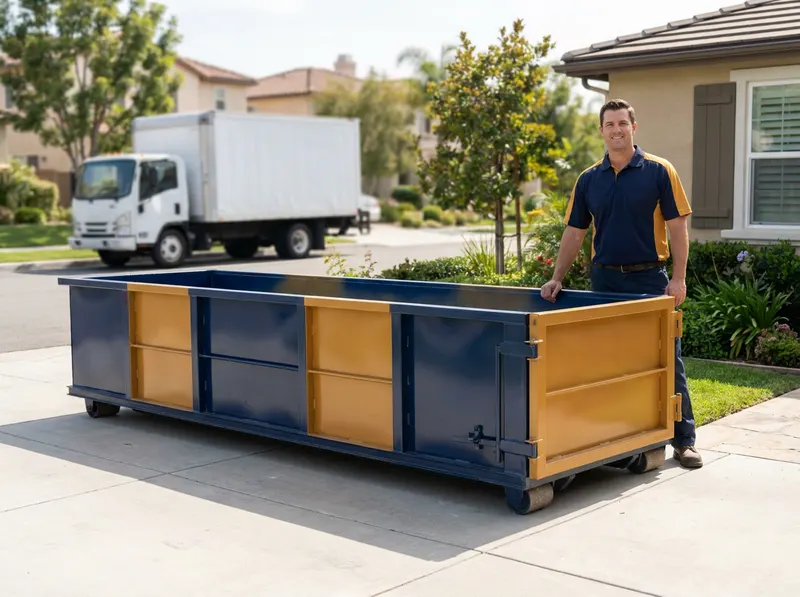
A contractor account differs from a one-off rental in that the same crew, sizes, and drop points repeat across multiple Irvine builds without re-quoting each time. A general contractor framing a custom home in Turtle Rock, a roofer stripping shingles in Northwood, and a property manager turning units in University Park each fit a different size on the same flat schedule. The five sizes cover the full range of jobsite volume: a 10-yard holds roughly 4 pickup loads and suits a single-bath gut in Oak Creek, a 20-yard holds about 8 loads for a whole-kitchen or multi-room remodel in Quail Hill, and the 30-yard and 40-yard handle roof tear-offs and new-construction framing waste in the Great Park Neighborhoods and Cypress Village. The trade-off is driveway and staging footprint versus haul frequency: a 40-yard means fewer swaps but needs a clear 22-foot run and overhead clearance, while a 10-yard tucks into a tight Woodbridge cul-de-sac but fills faster on a demo.
Roll-off placement on active Irvine sites follows a short sequence. Step 1: confirm the jobsite address, gate or lockbox access, and the flat size needed. Step 2: our team checks the drop point for the roughly 60 feet of straight approach a roll-off truck needs and for low branches or wires. Step 3: the container is placed on the driveway or lot, with plywood under the wheels on finished surfaces to protect pavers and concrete. Step 4: the crew loads to the fill line, debris kept level with the top rail so the load stays road-legal per California DMV load-securement rules. Step 5: a call or text triggers the swap or final haul, and disposal is routed to the appropriate transfer or recycling facility.
Weight matters on commercial loads because concrete, tile, and roofing are dense. Clean concrete and dirt often go to a recycler under California's construction-and-demolition diversion goals tracked by CalRecycle, and the flat rate already folds disposal in, so a heavy 20-yard of shingles still bills at $795. Separating clean wood, metal, and cardboard on site raises the recovery rate the EPA reports for construction and demolition debris and keeps the pull moving. Jobsite housekeeping around the container also intersects with OSHA jobsite safety expectations for keeping walkways and egress clear, which matters when inspectors visit an occupied Northpark or Portola Springs remodel.
Street placement inside the City of Irvine can require an encroachment permit when a container sits in the public right-of-way rather than on private property, so plan lead time when a driveway is unavailable. Recurring accounts benefit from standing swap windows: a roofer running back-to-back tear-offs in Woodbridge can lock a Monday drop and Friday haul, while a property manager cycling turnovers can hold a single 15-yard on a rolling schedule. A dumpster rental is not junk removal, the crew delivers and hauls the container, and the jobsite team loads it. For anything containing paint, solvents, asbestos, or other regulated material, route it through household hazardous waste channels or the county's designated program rather than the roll-off. Sources on right-of-way rules for jobsites are published by state transportation agencies such as Caltrans, and asbestos handling on renovation debris follows the federal NESHAP rules under the Clean Air Act. Portable-restroom needs on the same site fall outside this service. Regional debris routing details are also available through Earth911.
Every job gets a firm, written price after an on-site visit.
Tell us about your contractor & commercial accounts job in Irvine and we'll send a clear, written quote, usually the same day.
 Nuny Dumpister Rental