The 40-yard container measures roughly 22 feet long, 8 feet wide, and 8 feet tall, with a high-walled build meant for bulky, high-volume debris rather than heavy dense loads like concrete or dirt. It holds about 40…
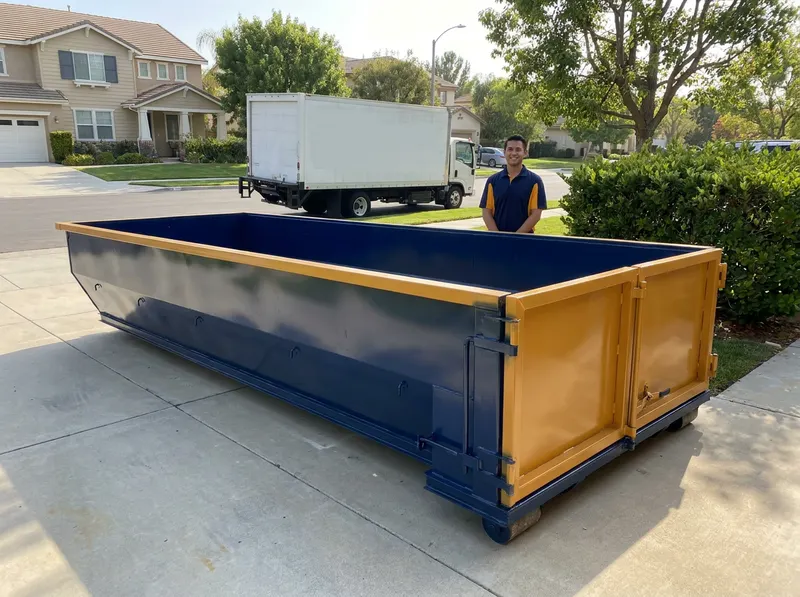
The 40-yard container measures roughly 22 feet long, 8 feet wide, and 8 feet tall, with a high-walled build meant for bulky, high-volume debris rather than heavy dense loads like concrete or dirt. It holds about 40 cubic yards, the equivalent of roughly 16 pickup-truck loads, and is the volume most homeowners choose for a full construction and demolition project or a whole-property clearout. If a job produces mostly light, voluminous material, old cabinetry, framing lumber, torn-out drywall, packed-out garages in Northwood and University Park, the 40-yard keeps everything in one container instead of two swaps.
Sizing comes down to volume against footprint. A 10-yard container fits a single-room remodel; a 20-yard suits a mid-size renovation; a 30-yard handles a roof tear-off or a large deck demolition; the 40-yard is for whole-house cleanouts, estate clearances, and commercial fit-outs where debris volume is the constraint and driveway space is not. The trade-off is real estate: a 22-foot box needs a clear, flat run, so tighter driveways in Turtle Rock or the compact lots around Cypress Village and Portola Springs sometimes fit a 30-yard better. For dense material, tile, brick, dirt, concrete, a smaller box is the safer pick, because weight, not room, becomes the limit under standard road-load rules the Federal Motor Carrier Safety Administration">FMCSA enforces on roll-off trucks.
Delivery works in a short sequence. Step 1: call (949) 603-1837 or text a photo of the pile so our team can confirm the 40-yard is the right fit. Step 2: pick a drop spot with about 60 feet of straight clearance and no low branches or wires. Step 3: the driver sets the container on boards to protect the driveway. Step 4: load evenly, keep debris below the top rail, and separate anything on the no-go list. Step 5: call for pickup and the same container leaves for the transfer station. Loads must stay level with the top edge, an overloaded or tarped-over container cannot legally travel, a rule tied to jobsite vehicle safety">OSHA motor-vehicle standards for load securement.
Some material is excluded regardless of container size. Household hazardous waste, paint, solvents, batteries, motor oil, must go to a designated drop-off, and Orange County residents can find local intake sites through recycling and disposal locators. Appliances with refrigerant, tires, and electronics also stay out of the box; California e-waste rules route those separately. Refrigerators, mattresses, and treated lumber often carry conditions, and California's toxics agency lists materials that never belong in a mixed roll-off. A dumpster rental is not junk removal, the container is dropped and the customer loads it; our team handles transport and disposal, not the hauling out of your garage. Rental terms, permit needs for street placement, and diversion targets under state waste policy can shift what a 40-yard load actually costs to process, which is why the flat $995 covers those fees up front. Placement on a public street near the Great Park Neighborhoods or Quail Hill may require an encroachment permit from the City of Irvine; a driveway drop in Woodbridge or Oak Creek does not.
Every job gets a firm, written price after an on-site visit.
Tell us about your 40-yard dumpster rental job in Irvine and we'll send a clear, written quote, usually the same day.
 Nuny Dumpister Rental